


Granny Boss
4.5194.00 Reviews
App Specs
- Version
- 4.3.7
- Updated On
- License
- Free
- Downloads
- 10,000+
- Developer
- Ketchapp
- Categories
- Arcade
- Platform
- Android
Screenshots
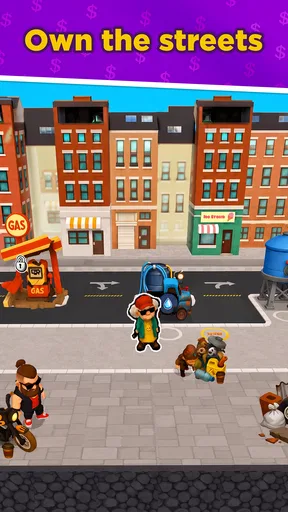
 Analysis by AppCompare
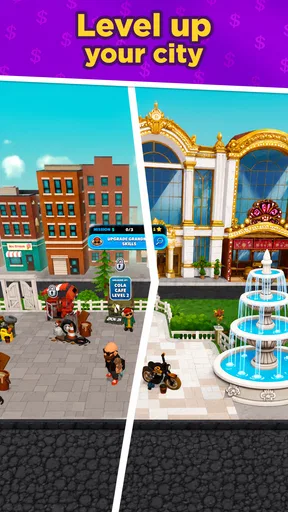
Restore the Hood immediately presents itself as a light arcade game with a clear fantasy: take neglected streets, turn the rewards from cleanup into progress, and gradually build a hotel business. I found that simple premise easy to understand within minutes, which matters in a genre often crowded with complicated menus and long tutorials. It is a free game from Ketchapp, aimed at Everyone, and its bright presentation makes it feel approachable rather than aggressive.
What kept me playing was the way the setting gives ordinary arcade actions a visible purpose. Clearing an untidy area is not just a score chase; it contributes to a larger neighborhood makeover. The hotel-building layer then gives those short actions a sense of direction. I would recommend it to someone who wants a casual game that can be opened for a few minutes at a time, especially when a full management simulator feels too demanding.
The game has an average rating of 4.5 from around 800 ratings and has passed 10 thousand installs. Those figures suggest that it has found a modest but interested audience, although I would not mistake that for proof that it will suit every arcade player. Its appeal depends heavily on whether you enjoy repeated improvement, visual tidying, and gradual business growth more than deep strategy.
From messy streets to a playable routine
I like how Restore the Hood turns a simple cleanup premise into a routine with a clear next step: improve the neighborhood, then use that momentum to grow the hotel. In this section, I’ll look at how that connection shapes the game’s early appeal and why its modest, visible goals suit short sessions better than a long, strategy-heavy commitment.
A first impression built around immediate progress
My first impression was that Restore the Hood understands the value of visible feedback. The central idea is easy to read: the neighborhood begins in poor shape, and my actions help make it more inviting. That gives each small objective a satisfying before-and-after quality. Instead of asking me to memorize a large system, the game lets the setting explain what I should care about.
This is where the arcade identity works well. The moment-to-moment play is designed to be accessible, while the tycoon structure gives the session a broader goal. I can focus on the next task without losing sight of the hotel empire promised by the concept. That balance is useful for players who like progression but do not want to study spreadsheets, production chains, or elaborate economic rules.
The opening also benefits from its tone. The neighborhood is not presented as a grim simulation of urban decline. It feels more like a playful renovation project, with the mess acting as a visual obstacle and the hotel acting as a reward for persistence. That choice keeps the experience comfortable for the Everyone rating and makes it suitable for younger players as well as adults looking for something undemanding.
Worth Reading Before You Choose

Baby Panda World Brings Quick Play to Modern Phones, but Its Game Library Feels Busy

ESPN’s Live Game View Makes Following Close Games Easier

QuizzLand Review: A Good Fit for Short Trivia Breaks, Not Every Player

Basketball Stars: Multiplayer Is Fast, but Can It Recover When Matches Go Wrong?

WEBTOON Turns Phone Updates Into a Better Reading Routine

Link to Windows Runs on Shared Habits, Not Social Feeds
Still, the accessible start hints at the main trade-off. Players who want a demanding arcade challenge may find the early rhythm gentle. The game’s satisfaction comes from accumulation and transformation, not from punishing precision. I enjoyed that approach during short breaks, but I would choose a faster reflex-focused arcade title when I wanted constant pressure or a leaderboard-driven test.
The neighborhood communicates more than the menus
The setting is the strongest organizing idea in the experience. A generic tycoon game could put the same upgrades in a blank interface, but here the street itself gives the progression a reason to exist. Cleaning and rebuilding are connected to the hotel project, so the environment becomes a readable map of improvement rather than a decorative backdrop.
That visual language also helps with orientation. When a game is built around repeated tasks, it can be easy to forget why the next action matters. Restore the Hood avoids some of that confusion by tying the work to a place I can imagine developing. The neighborhood creates a simple emotional loop: see disorder, take action, notice improvement, then work toward the next change.
I particularly like how this makes progress feel tangible even when the underlying systems are straightforward. A number going up is useful, but a street looking more complete is easier to remember. That distinction is important for casual play. If I return after a busy day, I do not need to reconstruct a complicated plan; I can look at the current state of the area and understand what kind of progress I am pursuing.
The art direction supports this mood by keeping the subject playful rather than realistic. The game’s premise could have been presented with a harsher visual tone, but the lighter approach makes the cleanup fantasy feel like a cheerful project. That is a good match for the arcade format, because the world stays inviting even when the player is repeating similar actions.
Why the hotel matters to the arcade loop
The hotel is more than a theme pasted onto street-cleaning tasks. It gives the arcade activity a longer horizon. Without that destination, the cleanup could feel like a series of disconnected chores. With it, the player has a reason to care about earning and reinvesting resources, even if the management side remains intentionally approachable.
I found this especially useful when deciding whether to keep playing after completing a small objective. The hotel creates a natural question: should I improve the current area, save toward a more meaningful development, or simply continue the next quick task? That kind of choice is not necessarily complex, but it gives the session shape.
There is also a practical advantage for casual players. The hotel project makes the game easy to explain to a friend: you clean up the neighborhood, collect rewards, and use that progress to build up the business. A concept that can be summarized clearly is often a sign that the game knows what it wants to be.
The limitation is that players expecting a full tycoon may want more economic depth than this format is designed to provide. I would not approach Restore the Hood as a detailed business simulator. Its management layer works best as motivation for arcade play, not as a replacement for a specialized hotel-management game with extensive staffing, pricing, or logistics decisions.
Sound, pacing, and the feeling of a short session
The game’s mood depends on more than its colorful setting. Its sound and pacing need to make repeated actions feel pleasant, and in my experience the overall presentation aims for a relaxed, upbeat rhythm. The game does not feel like it is constantly shouting for attention. That makes it comfortable to play while waiting for transport, taking a short break, or winding down without committing to a long session.
The pacing is important because the core loop is repetitive by design. A single cleanup action cannot carry an entire game, so the experience needs frequent signs that the player is moving forward. The neighborhood theme helps here: each small success contributes to the feeling of restoration, while the hotel provides a larger destination. The result is a rhythm of action, reward, and improvement rather than one endless task.
I would describe the sound design as supportive rather than dominant. It serves the cheerful atmosphere and helps actions feel finished, but the game’s identity comes more from its visual transformation and progression than from a memorable musical score. That is not a serious flaw, though it means players looking for a strongly musical arcade experience may prefer a game where rhythm and soundtrack are the main attraction.
One useful habit is to treat each play session as a small work cycle rather than trying to force a long run. I had a better experience when I chose one immediate neighborhood goal, played until I reached a satisfying improvement, and then stopped. That approach keeps the repeated actions from becoming tiring and makes the hotel progression feel like a series of manageable renovation steps.
How the mechanics fit the atmosphere
The mechanics and presentation generally point in the same direction. The arcade actions are simple enough to keep the game moving, while the tycoon framing gives them context. If the game had paired its cheerful art with harsh failure conditions, the mood would have felt inconsistent. Instead, the accessible structure supports the idea of turning an overlooked area into something welcoming.
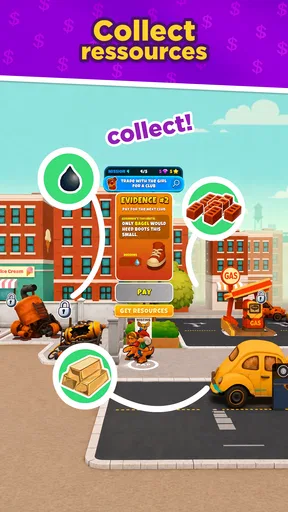
This fit is one of the game’s best qualities. The setting is not merely a skin over unrelated mechanics. Cleaning, collecting, and building all belong to the same fantasy of improvement. That coherence makes the experience easier to enjoy even when the individual actions are not especially complex.
At the same time, the simplicity can become a weakness during longer sessions. Once I understood the basic loop, the challenge was less about discovering new ways to play and more about deciding how long I wanted to continue. That is normal for a casual arcade tycoon, but it is worth considering before installing. If you need strategic variety every few minutes, the game may feel too narrow.
The best way to play is to use the progression as a pacing tool. Rather than tapping through tasks automatically, I recommend paying attention to which improvement changes the neighborhood most visibly and using that as a short-term target. This makes the visual transformation part of the decision-making, not just a reward that happens in the background.
Free access and the question of spending
Restore the Hood is free to download, which makes it easy to try without committing money at the start. It includes in-app purchases ranging from $0.99 to $49.99 per item, so players who prefer completely cost-free progression should keep that structure in mind. I would approach the purchase options as optional convenience rather than as a reason to rush through the neighborhood.
My advice is to play naturally first and decide whether the basic loop is enjoyable before considering any purchase. Spending cannot fix a mismatch between the game and your preferred style. If you dislike repeated arcade tasks or want a deep hotel simulation, paying for faster progress would not address the underlying issue.
For families, the Everyone rating makes the game broadly approachable, but younger players may still benefit from guidance around optional purchases. The colorful presentation can make a game feel harmless and simple, while purchase menus are still something adults should review before handing over a device. That is less a criticism of the setting than a sensible part of managing any free-to-play game.
Who will enjoy it, and who should skip it
I think Restore the Hood is a good fit for players who enjoy tidy-up fantasies, visible restoration, and light business progression. It works particularly well for someone who likes to make small gains during spare moments and wants a game that explains itself through the environment. The combination of a neighborhood makeover and hotel growth gives casual play more purpose than a score-only arcade title.
It is also a reasonable choice for players moving from simple arcade games toward tycoon mechanics. The game offers an introduction to reinvestment and long-term goals without demanding the attention of a larger management simulator. If you are curious about the genre but do not want to begin with complex menus, this is a welcoming starting point.
I would skip it if your priority is competitive mastery, elaborate hotel economics, or a constantly changing challenge. Players who prefer precise reflex tests may find the restoration theme too relaxed, while experienced tycoon fans may find the business layer too light. A dedicated strategy game would be better for anyone who wants to control detailed operations rather than use management mainly to support arcade progression.
Compared with the usual alternatives, its advantage is the connection between action and setting. Many arcade games focus on endless scoring, and many tycoon games focus on menus and optimization. Restore the Hood sits between those approaches: the hands-on activity keeps the game immediate, while the hotel gives the results a visible destination. The compromise is that it may not reach the depth or intensity of either specialist type.
Practical details before installing
The game is currently at version 4.3.6 and requires Android 7.0 or later. That makes the compatibility requirement relatively accessible for many Android users, although anyone with an older device should check the operating system before trying to install it. Since the game is built around short arcade interactions and gradual development, it is most appealing on a phone that can be picked up easily throughout the day.
Ketchapp is the developer behind the game, and the presentation reflects a focus on quick-to-understand mobile play. I would not install it expecting a console-scale production or a long narrative campaign. I would install it expecting a compact arcade experience with a clear setting, a cheerful renovation mood, and progression that rewards returning to the same neighborhood.
A realistic everyday scenario is a ten-minute break between errands. I can open the game, focus on one street or hotel-related objective, complete enough actions to see a change, and close it without feeling that I abandoned a complicated plan. That is where the design makes the most sense. It turns a small amount of free time into a contained project rather than demanding a full evening.
The atmosphere holds together, with a deliberately modest ceiling
After spending time with Restore the Hood, I see its main achievement as consistency. The art direction, neighborhood setting, sound, and pacing all support the same idea: improvement should feel satisfying, friendly, and easy to follow. The mechanics do not overpower that mood, and the hotel-building goal gives repeated arcade actions a reason to continue.
Its weaknesses come from the same simplicity that makes it accessible. The loop can feel repetitive during extended play, the management side is not aimed at serious simulation fans, and the optional purchase range means some players will want to be careful about how they progress. None of those points invalidate the concept, but they define the audience clearly.
My honest recommendation is to treat it as a relaxed arcade renovation game, not as a full hotel tycoon. If that description sounds appealing, the free entry makes it easy to test, and the Everyone rating keeps its tone broadly approachable. If you want demanding reflex competition or deep economic control, another category specialist will serve you better.
For me, the strongest reason to return is the coherent playable mood. I am not just completing abstract tasks; I am helping a neglected place become more inviting and using that momentum to build something larger. That simple connection gives Restore the Hood more personality than its basic loop might suggest, and it is why I would recommend Restore the Hood to friends who enjoy gentle progress, cheerful environments, and arcade games with a small sense of purpose.
In the end, Restore the Hood succeeds when played at its own pace. Its appeal is not complexity or intensity, but the pleasant rhythm of action followed by visible change. For short sessions and casual restoration fans, that is enough to make the neighborhood worth revisiting.
Pros
- Nostalgic street-racing atmosphere with a distinctive urban style.
- Short races make it easy to enjoy during quick gaming sessions.
- Vehicle customization adds a personal touch to your rides.
- Progression gives you reasons to keep unlocking new content.
- Simple controls are approachable for casual mobile players.
Cons
- Some upgrades may require considerable grinding to unlock.
- Races can feel repetitive after extended play sessions.
- Performance may vary on older or less powerful devices.
- The learning curve can feel uneven in later challenges.
- Limited variety may reduce its long-term replay value.
FAQs for Granny Boss
What is Restore the Hood about?
Restore the Hood is a casual restoration and management game focused on bringing neglected neighborhoods back to life. You typically clean up damaged areas, repair buildings, improve public spaces, and make decisions that gradually transform the environment. Progress is presented through visual changes, giving you a clear sense of how each completed task improves the community.
Is Restore the Hood free to download and play?
Restore the Hood can generally be downloaded for free, although the exact availability and monetization options may depend on your Android or iOS region. Like many free mobile games, it may include optional in-app purchases, advertisements, or systems that encourage waiting or spending resources. Check the store listing before installing if you want to confirm current pricing and purchase details.
Does Restore the Hood require an internet connection?
Some parts of Restore the Hood may work without a constant connection, especially basic gameplay and previously loaded content. However, internet access can be required for advertisements, cloud-related features, updates, account synchronization, or in-app purchases. If you plan to play offline, test the game after installation because requirements can change with new versions or platform-specific features.
Is Restore the Hood suitable for children?
Restore the Hood is generally aimed at players who enjoy relaxed building, renovation, and management gameplay rather than intense action. Even so, parents should review the age rating, advertising policy, and in-app purchase settings before allowing children to play. If the game uses timers, virtual currency, or optional purchases, parental controls are recommended to prevent accidental spending.
What devices are compatible with Restore the Hood?
Compatibility depends on the version available through the Google Play Store or Apple App Store. In general, Restore the Hood should run on relatively recent Android and iOS phones or tablets, but older devices may experience slower loading, reduced graphics quality, or limited support. Before downloading, compare your device's operating-system version and available storage with the requirements shown on the official store page.


